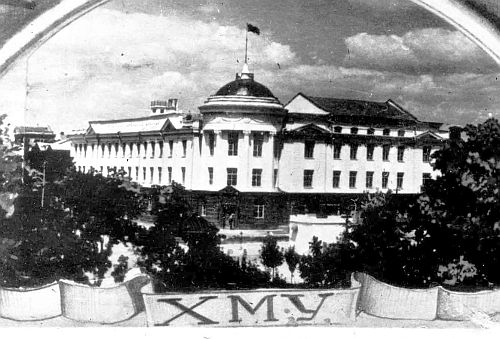
The history of the establishment and development of Kherson State Maritime Academy is closely linked with the history of Kherson’s growth as a center for shipbuilding and seafarer training.
Founded in 1778 in a strategically advantageous location, both geographically and militarily at the time, Kherson initiated the shipbuilding industry on the Black Sea.
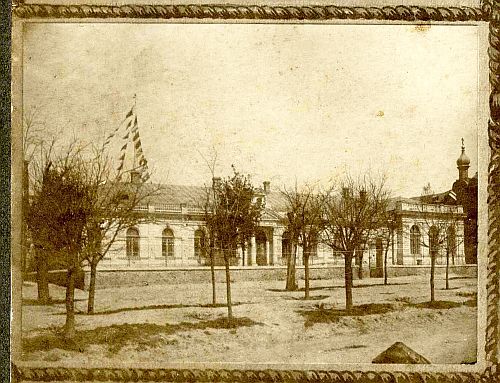
With the development of shipbuilding, the need for training national maritime specialists—navigators and skippers—became increasingly urgent.
On February 20, 1834, at the request of Count Vorontsov and by the resolution of Emperor Nicholas I, the Merchant Shipping School was opened in the city of Kherson. The decree stated: “The purpose of this educational institution is to prepare young men, firstly, as navigators and skippers for private merchant ships, and secondly, as builders of commercial vessels…”
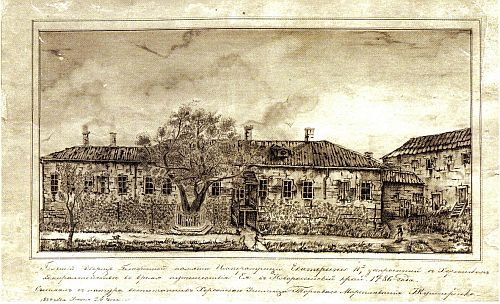
To accommodate the newly established school, three buildings of the former Admiralty were allocated. The student body consisted of 24 pupils aged 14–17, mostly children of merchants and townspeople living in southern Ukraine and Crimea. The duration of study at the school was four years.
A distinctive feature of the newly established maritime educational institution was its mixed form of funding. In addition to students on state support, the school’s staff included 10–14 students paying their own tuition, as well as several free listeners from among practicing seafarers.
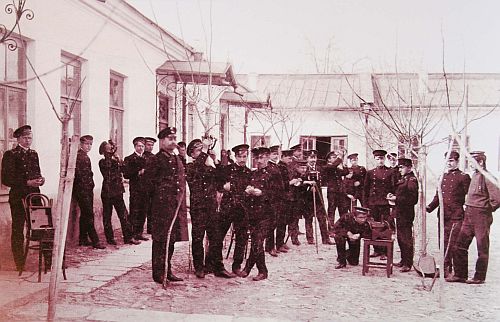
Applicants for admission to the school were required to be able to read and write, know the four basic rules of arithmetic, and be of strong constitution, free from physical defects, and brought up “in the fear of God and good moral conduct.”
In addition to general education and specialized subjects, the school’s curriculum included foreign languages: Greek, Turkish, Italian, German, and French.

The school was a closed-type institution and operated in a barracks-style setting, so students were not allowed to go home until the completion of the full course.
Upon graduation, top students were awarded the rank of navigator, while the remaining pupils received the rank of assistant. Those who distinguished themselves were rewarded with books, maritime instruments, and large or small silver medals.
The first maritime educational institution in Ukraine had the task of organizing professional training for national maritime personnel and gradually replacing foreign skippers with its own graduates. By the end of the 19th century, graduates of the Kherson School had completely replaced foreign navigators and skippers in the Black Sea.
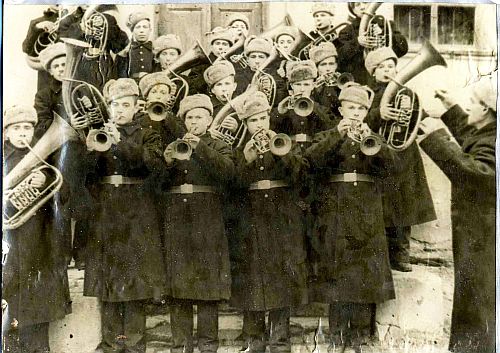
Over the years, the traditions of the maritime institution developed, and its popularity among young people grew.
In 1859, T. H. Shevchenko, while in exile, wrote to his brother Varfolomiy: “You write that you were not at home, that you took the boys to Kherson. You did well! But did you enroll them in the Merchant Shipping School? If you did, then pray to God and go to sleep. The boys will become men.”
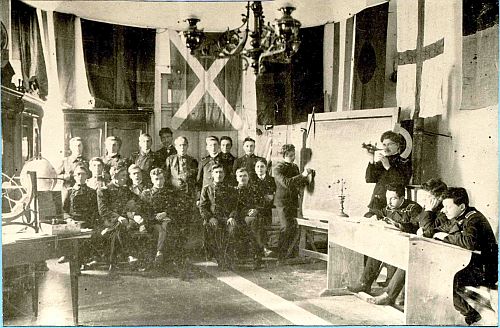
As history shows, T. H. Shevchenko’s high assessment of the quality of education and training of cadets at the “Kherson Maritime School” continues to be confirmed to this day.
The maritime educational institution has been repeatedly reorganized and has acquired its status in accordance with the state’s educational policy:
In 1834 – Merchant Shipping School.
In 1872 – Second-grade Nautical Classes, headed by a committee of five members elected by the City Duma.
In 1875 – Nautical School, which trained only short-sea navigators.
In 1880 – Three-class Educational Institution:
Class I – Preparatory class for coastal navigation navigators;
Class II – For skippers of coastal and navigator’s voyages;
Class III – For deep-sea skippers.

Since 1903, the institution became a Deep-Sea Nautical School with a three-year course for cadets aged 17 to 24. In the same year, uniforms were introduced for cadets and instructors.
In 1920, the institution was reorganized into an Evening Water Transport Technical School.
Since 1930 – Kherson Marine Technical School, which trained specialists in the operation of the merchant marine fleet. Women were also admitted to this department.
In 1944, the maritime institution resumed its work as a closed-type Nautical School for the training of navigators, marine engineers, and ship repair technologists, with full state support for cadets. Classes were held in the building of City School No. 20.

In 1996, the Nautical School was reorganized into Kherson Maritime College of the second level of accreditation.
In 2007, by the order of the Cabinet of Ministers of Ukraine No. 414-r dated June 13, 2007, and the decree of the Ministry of Education and Science of Ukraine No. 500 dated June 16, 2007, the Higher Educational Institution “Kherson State Maritime Institute” was established on the basis of the existing Maritime College and a private maritime institute.
On June 15, 2011, the Government adopted the order “On the Establishment of Kherson State Maritime Academy.”
Over all the years of its existence, the Kherson maritime institution has trained more than 45,000 maritime specialists. Among them are over three thousand deep-sea captains, more than two thousand chief engineers, about a thousand electromechanical engineers, and a similar number of radio station chiefs of modern ships.
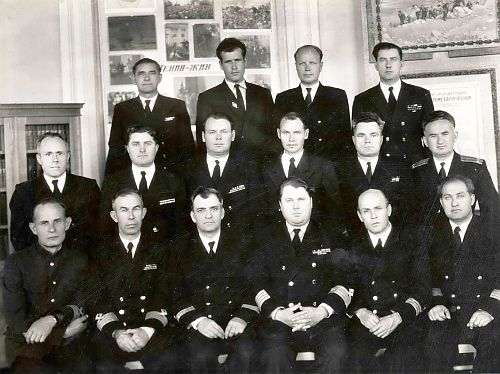
Among the graduates are 10 Heroes, 9 Admirals, 2 Generals, 3 writers, 3 laureates of the USSR State Prize, 12 scientists, 3 heads of shipping companies, 4 port directors, 2 directors of ship repair yards, 2 heads of maritime schools, 2 Deputy Ministers of the USSR Merchant Fleet, as well as honored teachers of Ukraine and authors of textbooks for USSR nautical schools.
The names of the graduates of the Kherson maritime institution have been given to 32 merchant fleet vessels.
